



































































































































































































































































Supreme Court Orders Imran Khan Transfer to Shifa International Hospital


ISLAMABAD: The Supreme Court on Tuesday ordered that Pakistan Tehreek-e-Insaf (PTI) founder and former prime minister Imran Khan be shifted from Adiala Jail to Shifa International Hospital for medical treatment for the next few days.
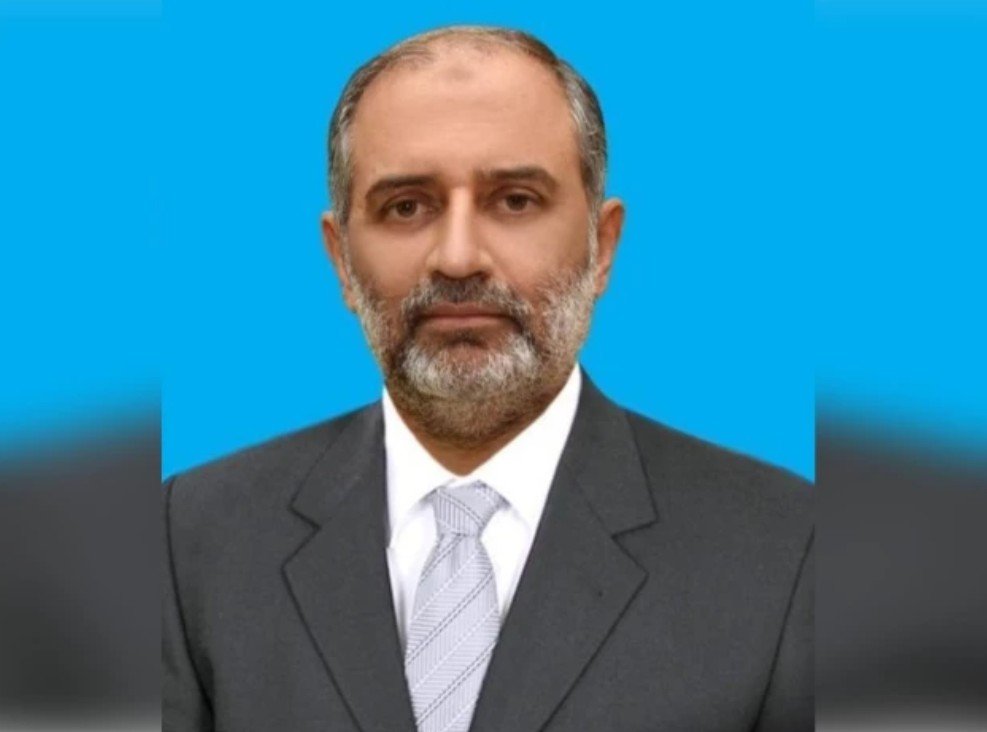
A three-member bench, headed by Justice Shahid Waheed and comprising Justice Naeem Akhtar Afghan and another member, issued the directions while hearing petitions concerning Khan’s access to his family members and personal physicians, as well as his medical records.
The court also directed the government to arrange weekly meetings between Imran Khan and his immediate family and facilitate telephone conversations between him and his children.
Personal physician to examine Imran
Under the court’s order, Khan’s personal physician, Dr Faisal Sultan, will be granted access to him. The court also ordered the formation of a medical board comprising an eye specialist, a general physician and a cardiologist, along with Dr Sultan.
Khan’s sister, Dr Uzma Khanum, will also be associated with the medical board.
The court directed that the cost of Khan’s treatment at the hospital would be borne by his family.
The Supreme Court further ordered the government to submit Khan’s complete medical record, rather than a summary. The record is to include medical tests, reports, prescriptions, medical opinions, examination reports and details of treatment administered since his arrest.
Justice Shahid Waheed questioned why the government had submitted only a summary of the medical record.
“What prevents you from providing the complete medical record of Imran Khan?” the judge asked.
Court stresses confidentiality
The Supreme Court directed Khan’s family and lawyers not to share his medical reports with the media.
Justice Naeem Akhtar Afghan emphasized that the medical information should remain confidential.
PTI Secretary General Salman Akram Raja assured the court that the report would not be made public.
The court also ordered that Imran Khan’s medical reports should not be used for political purposes.
The judges further directed PTI leaders and supporters not to engage in political activities, media talks or press conferences outside the hospital.
“Do not engage in politics outside the hospital,” Justice Afghan told the parties, noting that other patients at the hospital should not be disturbed.
Raja and PTI Parliamentary Secretary Shahid Khattak assured the court that political activities would remain separate from Khan’s treatment.
Concerns over blood pressure and anxiety
The proceedings followed the submission of medical reports concerning Khan’s health.
According to the reports, Khan has experienced fluctuating blood pressure, palpitations, headaches, restlessness and significant anxiety.
A PIMS cardiologist who examined him on August 1 recorded his blood pressure at 140/100mmHg and recommended measures to reduce mental stress, including more frequent meetings with his wife and access to reading material.
A four-member medical board that examined Khan on August 10 recorded his blood pressure at 140/80mmHg. The board recommended daily walking and relaxation, as well as more frequent interaction with his immediate family and spouse to help manage his anxiety and blood pressure.
The medical report stated that Khan had undergone at least 39 medical check-ups since his incarceration, while jail medical officers were examining him three times a day.
It also stated that his ECG was normal and that his vision had improved to almost normal following treatment for an eye condition.
However, PTI questioned the authenticity and completeness of the medical documentation and called for Khan to be examined by his personal physicians, Dr Faisal Sultan and Dr Asim Yusuf, as well as an independent medical board.
Court questions implementation of meeting orders
During the hearing, the Supreme Court was informed that Imran Khan’s sisters had been permitted 48 meetings with him over the past three years.
The court sought the complete record of those meetings, along with details of telephone conversations between Khan and his children.
The bench also questioned why directions issued by the Islamabad High Court regarding meetings with Khan had not been implemented.
The court summoned Adiala Jail authorities to the next hearing and directed them to explain why the high court’s orders had not been complied with.
During the proceedings, Khan’s sister Uzma Khanum was stopped from addressing the bench directly, with Justice Afghan telling her that she was represented by counsel.
Her lawyer, Uzair Bhandari, requested that Uzma and Khan’s other personal physician, Dr Asim Yusuf, be allowed to meet him.
Justice Waheed stressed that meetings between Khan and his sisters were a fundamental right rather than a concession.
Court seeks details of Khan’s legal cases
The Supreme Court also directed the authorities to provide complete details of the cases pending against Imran Khan.
The information sought includes the number of cases in which he is an under-trial prisoner, the cases in which he has been convicted and those in which his sentences have been suspended.
The court also questioned medical findings suggesting that some of Khan’s vital organs had been affected and referred to reports concerning his heart condition and mental distress.
“Do not politicise Imran Khan’s illness,” Justice Afghan remarked, urging all sides to focus on the former premier’s health.
The court observed that access to medical facilities was a fundamental right and emphasized the state’s responsibility toward people in custody.
“We are mindful of the constitutional and legal obligation of the state, and consequently of the court, to safeguard the life, health, dignity and security of persons in custody,” the order stated.
The court added that imprisonment does not deprive a person of the right to humane treatment and necessary medical care.
Government opposes immediate transfer
Additional Attorney General Aamir Rehman opposed the hospital-transfer order, arguing that the government had not been given notice and that Khan could not be shifted to hospital immediately.
The government has previously rejected allegations that Khan was being denied adequate medical treatment.
Adviser to the Prime Minister on Political and Public Affairs Rana Sanaullah told the Senate that Khan was receiving available specialist medical care and that meetings in jail were being conducted in accordance with the law and relevant court orders.
Khan remains incarcerated
Imran Khan has remained in custody since August 2023. He and his wife, Bushra Bibi, are currently incarcerated at Rawalpindi’s Adiala Jail.
The couple were sentenced in December 2025 to 17 years in prison in the Toshakhana-II case, involving allegations concerning the retention of a Bulgari jewellery set received as a gift from the Saudi crown prince during an official visit.
Khan is also serving a sentence in the £190 million corruption case and faces other legal proceedings, including cases related to the May 9, 2023 protests.
The Supreme Court adjourned the hearing until September 16, when it is expected to review compliance with its directions and receive further information from the relevant authorities.