



































































































































































Why Pakistan Needs More Administrative Units

One of the strongest arguments for creating additional administrative units is accessibility.
By Editor:
Pakistan is once again debating a question that has remained unresolved for decades: should the country create more administrative units?
The debate has gained fresh attention in recent months, with politicians, experts, policymakers and civil society representatives discussing whether the existing administrative structure is capable of meeting the needs of a growing population. A national debate held in Islamabad in August also focused on new provinces, stronger local governments, fiscal devolution and administrative reforms.
The question deserves serious discussion, not because smaller provinces are automatically a solution to Pakistan’s problems, but because the country has changed significantly since the existing provincial structure was established.
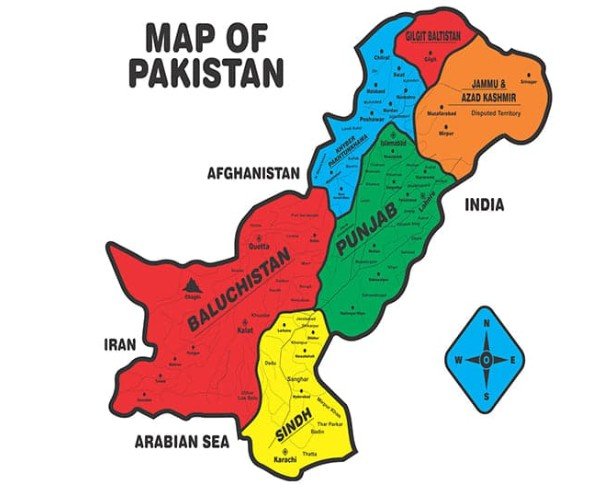
According to the 2023 census, Pakistan has four provinces — Punjab, Sindh, Khyber Pakhtunkhwa and Balochistan — along with Islamabad Capital Territory, while Azad Jammu and Kashmir and Gilgit-Baltistan have their own administrative arrangements. The country currently has 30 divisions, 136 districts and 591 tehsils/talukas.
The size and diversity of these regions raise a basic governance question: can large provincial administrations effectively respond to the needs of communities located hundreds of kilometres away from provincial capitals?
Bringing government closer to citizens
One of the strongest arguments for creating additional administrative units is accessibility.
A citizen living in a remote district should not have to travel long distances to access government institutions, seek administrative decisions or raise development concerns.
Smaller administrative units could bring senior officials, departments and decision-making structures closer to the people.
This could be particularly important in regions where geography, population growth or poor infrastructure makes access to provincial capitals difficult.
However, simply drawing new boundaries would not automatically improve governance. New units would need properly staffed institutions, financial resources and clearly defined responsibilities.
Population growth has changed the equation
Pakistan’s population has grown dramatically over the decades. Cities have expanded, new urban centres have emerged and the demands placed on governments have become more complex.
Punjab, for example, contains 36 districts according to the 2023 census, while Sindh has 30, Khyber Pakhtunkhwa 35 and Balochistan 34.
The question is therefore not simply how many provinces Pakistan should have. It is whether administrative structures are appropriately designed for the population, geography and economic needs of the people they serve.
A government structure designed for a much smaller population may require restructuring when population centres, economic activity and public-service requirements change.
Smaller units could improve representation
More administrative units could also give different regions greater political and administrative representation.
In large provinces, communities in distant areas can sometimes feel that decisions are concentrated in major cities and provincial capitals.
Creating smaller provinces or strengthening existing administrative divisions could potentially give local populations a stronger voice in development planning.
But representation must be accompanied by accountability. A new province with the same administrative weaknesses would simply create another layer of government without solving the underlying problems.
The financial question cannot be ignored
This is perhaps the biggest challenge.
Creating additional provinces would mean creating new governments, assemblies, departments and administrative structures. These institutions would require money.
Pakistan already faces serious fiscal constraints. Any proposal for new provinces must therefore explain how the new units would finance their governments, provide public services and develop infrastructure.
The debate over administrative restructuring is closely connected to Pakistan’s wider federal financial arrangements, including the distribution of resources between the federation and provinces. Analysts have pointed out that creating new provinces could require difficult discussions over revenue distribution and the National Finance Commission framework.
Therefore, supporters of new provinces need to present more than political arguments. They need to provide realistic financial and administrative plans.
New provinces are not the only answer
There is another important distinction that is often missing from the public debate.
Pakistan can create new provinces, but it can also strengthen existing divisions, districts and local governments.
The 2023 census shows that the country already has hundreds of districts and tehsils.
If these lower levels of government receive adequate authority, resources and accountability, many administrative problems could potentially be addressed without immediately creating new provinces.
This is why local government reform should remain at the centre of the discussion.
Pakistan’s citizens need functioning municipal services, better policing, accessible health facilities, quality education, effective land administration and responsive development authorities. Whether these services are controlled by a province, division or district matters less to an ordinary citizen than whether the services actually work.
Administrative reform must not become political engineering
There is also a danger that the debate over new provinces becomes a tool for political competition.
Administrative boundaries should not be created simply to benefit a particular political party, ethnic group or political leadership.
Any restructuring should be based on population, geography, economic viability, administrative accessibility, public demand and the ability of the proposed unit to govern effectively.
It should also involve consultation with the people who would actually live in the proposed units.
The Constitution already sets a high legal threshold for changing provincial boundaries. Article 239 requires a constitutional amendment, and a constitutional amendment altering the limits of a province cannot be presented for presidential assent unless it has first been approved by that province’s assembly by at least a two-thirds majority of its total membership.
This means that creating new provinces is not merely an administrative decision. It requires political consensus and a constitutional process.
Pakistan needs a serious national conversation
The debate should therefore move beyond slogans such as “more provinces” or “no new provinces”.
The real question should be: What administrative structure can deliver better government to Pakistan’s citizens?
If the answer in some regions is a new province, that possibility should be studied seriously.
If stronger divisions, districts and local governments can achieve the same objective at lower cost, those options should also be considered.
A national commission comprising constitutional experts, economists, administrators, local government specialists and representatives from all provinces could examine these options and publish its findings.
Such a process could assess population size, geographic accessibility, revenue potential, administrative costs, development needs and public opinion before any final decision is made.
Conclusion
Pakistan does not necessarily need more provinces simply for the sake of having more provinces. It needs better governance, stronger institutions and government that is closer to its citizens.
For some parts of the country, this may require new administrative units. For others, empowering districts, divisions and local governments may be sufficient.
The objective should therefore not be to redraw Pakistan’s map for political reasons. The objective should be to redraw — or reform — the system of governance so that citizens can receive government services without distance, bureaucracy and political concentration becoming permanent obstacles.
Pakistan’s administrative structure should evolve with its population, economy and changing needs.
The debate has started again. The country now needs evidence, consultation and constitutional consensus to determine what comes next.

